

What did Google actually publish?
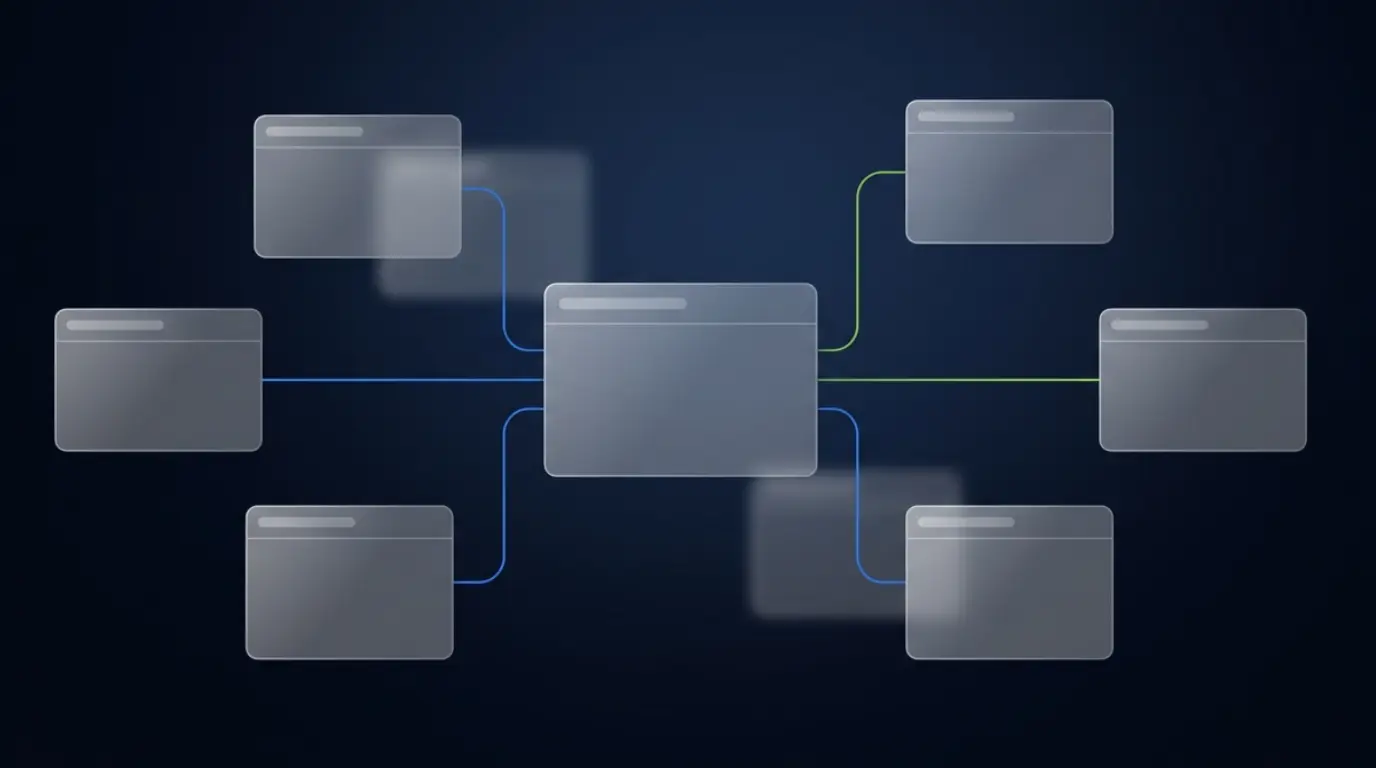
Strip away the engineering and the format is almost boring, which is the point. The standard says: represent your knowledge as a folder of plain text files. One file per concept. A concept is anything worth knowing, such as a product, a metric, a service, a customer problem, a competitor, or a rule for how your team works.
Each file carries a few labeled fields at the top: what type of thing it is, a title, a one line description, and when it was last touched. Below that is plain writing. Files link to each other, so the folder becomes a connected map rather than a pile of documents. A human curates it. The AI handles the tedious upkeep that people always abandon. No special software, no vendor lock-in, readable by a person and a machine at the same time.
Google built this so the AI agents working on company data stop guessing. The part that matters to a revenue leader is the problem it was built to solve.
The problem finally has a name
Google calls the starting condition a fragmented context landscape. In plain terms: the facts an AI needs are scattered across systems that do not talk to each other, written in different words, with half of it living only in the head of one senior person. When an AI tries to answer a real question, it has to reassemble that answer from the scattered pieces, and it does a mediocre job.
Read that with your own company in mind. That paragraph is a description of your business.
Ask your team a simple question: what is our position against our top competitor? The honest answer is that the real version lives in five places at once. Part is in the CRM. Part is in a folder on a shared drive. Part is in a Slack thread from last quarter. Part is in an old proposal nobody can find. The best part is in the head of the one rep who has won that matchup six times. Nobody has written it down in one place, in one voice, that everyone agrees on. That is the fragmented context landscape, at company scale.
Salesforce's 2026 State of Sales report finds the average rep spends roughly 40 percent of the workweek actually selling. The other 60 percent goes to admin, data entry, internal meetings, and hunting for the right information and content. A real slice of that 60 percent is people rebuilding answers that should already exist, because the answer is scattered and out of date.
Source: Salesforce, 2026 State of SalesYou are paying full salary for people to reassemble context that a curated knowledge base would hand them in seconds. That cost is already on your books whether you track it or not.
Why does your AI give generic answers about your company?
Start inside the building. Your reps now have AI assistants. When a rep asks one to draft a reply to a security objection or build a competitor brief, it pulls from those same scattered, inconsistent sources, so it hands back a generic answer a buyer can smell. The temptation is to blame the model and go shopping for a better one. Most of the time the model is fine. What you fed it was thin, scattered, and out of date.
The same gap shows up outside the building. Buyers now ask ChatGPT, Claude, Gemini, and Perplexity who to consider before they ever open a website. Gartner finds 61 percent of B2B buyers would prefer a fully rep-free buying experience, and most finish the bulk of their research before they contact you. Those systems build a picture of your company from whatever they can find. When your site says one thing, your LinkedIn says another, and your Google Business Profile is half empty, the picture is blurry and you do not get named.
Both failures share one root cause, and one fix: structured, consistent, curated knowledge.
The governance point most people will miss
One line in Google's design philosophy is worth sitting with. The knowledge is curated by your team and managed like code. The AI handles the bookkeeping. A human owns the truth.
That is the whole argument for what we call human above the loop. AI is very good at the upkeep people hate: updating cross references, touching many files in one pass, keeping things tidy. Humans are the only ones who can decide what is true, what is approved, and what should ever reach a buyer. A knowledge base built this way makes your people faster while a responsible human still owns every buyer-facing move. Speed and accountability at the same time.
What should you build this quarter?
You do not need Google's tooling or an engineer to act on this. You need the discipline behind it. A starter your team can stand up in a few weeks, no hire required:
-
One concept per file
Open a shared folder. Make one document for each thing worth knowing: each service, each ideal customer segment, each common objection, each competitor, each proof point. Resist the urge to dump everything into one giant doc.
-
A short header on every file
At the top of each, write four lines: what type of thing this is, who it is for, a one sentence description, and the date you last updated it. That header is what makes a file findable and trustworthy six months from now.
-
Write it in one plain voice
State what you do, who you do it for, the problem you solve, and the evidence. Cut the adjectives. If a sentence would not survive a skeptical buyer reading it out loud, rewrite it.
-
Link related files to each other
Your competitor file should point to the proof that beats them. Your objection file should point to the service that answers it. The connections are where the value compounds.
-
Make the same facts true everywhere
Your website, LinkedIn, Google Business Profile, and leadership bios should agree, word for word, on the facts that matter. Inconsistency is what makes both buyers and AI systems distrust you.
-
Assign an owner and a review date
Knowledge rots. Put one name on the folder and a recurring date to review it. That is human above the loop in practice.
Do this and two things happen. Your reps stop rebuilding answers from scratch, and the AI systems that describe your company, inside and outside the building, finally have something clear to read.
Where Get 'er Done fits
If you want to see how legible your company looks to an answer engine today, the free tools on this site will show you in a few minutes, no email required. If you would rather have the knowledge base built and governed for you, that is the Revenue Knowledge Base Build, and making your company easier for AI to find and cite is the work behind Agent Found. Either way, the principle Google just published into the open is the one to act on. Clear, structured, human-owned knowledge is what AI reads.
Common questions
Is the Open Knowledge Format something my business has to adopt?
No. It is a technical standard for engineering teams. What matters for you is the principle behind it: AI systems work best on knowledge that is structured, consistent, and human-curated. You can apply that with a shared folder and a little discipline.
We already have a CRM. Is that not our knowledge base?
A CRM stores deal records. It rarely holds your positioning, your objection answers, your competitor intelligence, or your proof, in a form an AI tool or a new rep can read and reuse. Those are different jobs.
How soon does AI search actually matter for us?
Buyers are already using it to build shortlists before they contact anyone. The companies that are easy to describe now are the ones getting named now.
- Google Cloud, "Introducing the Open Knowledge Format," June 12, 2026.
- Salesforce, 2026 State of Sales.
- Gartner, B2B buyer behavior research.
See how AI reads your company
Start with the free, no-email diagnostics, or talk through what a governed knowledge base would look like for your team.